At TOP DOG we believe that proper nutrition is the foundation of a healthy, active life.
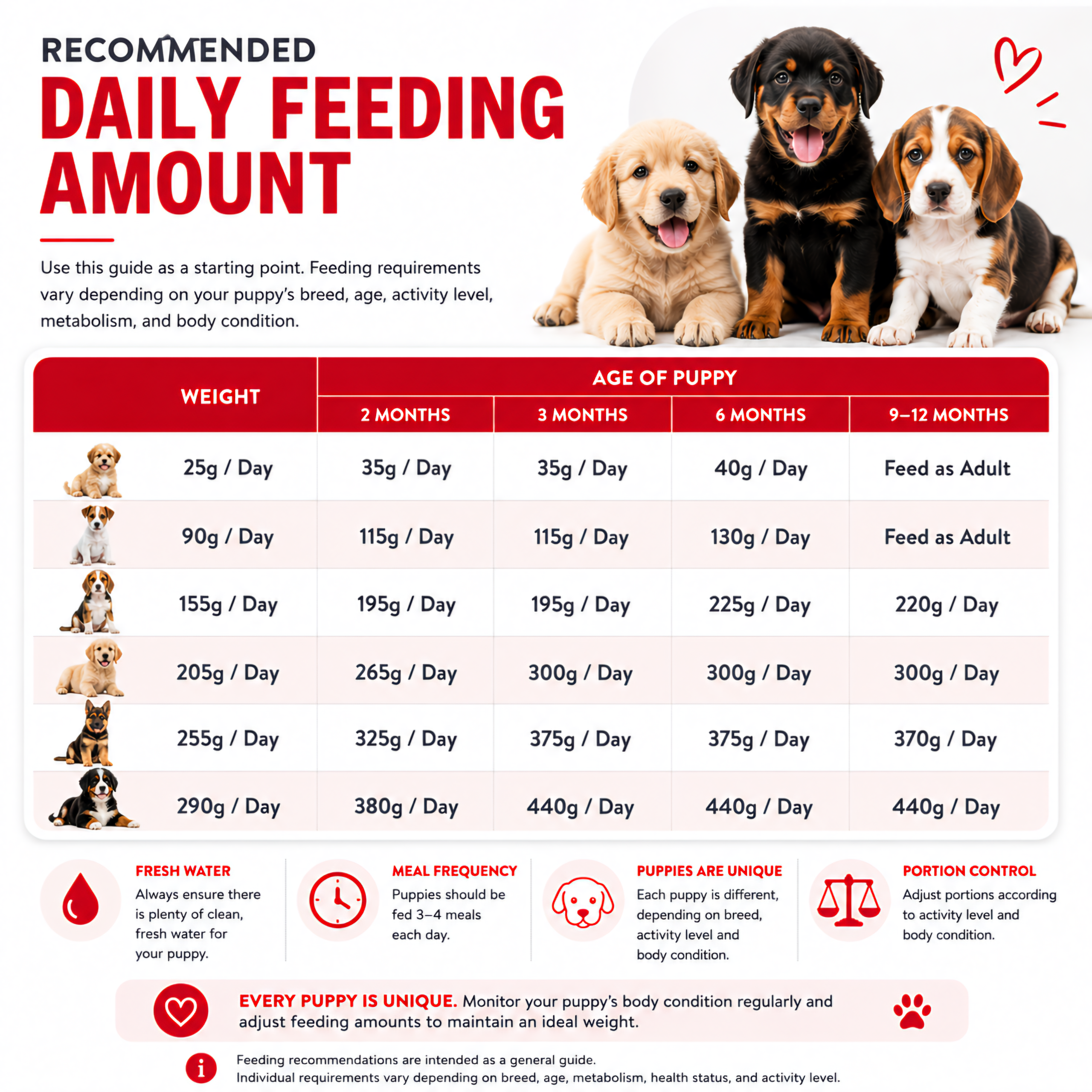
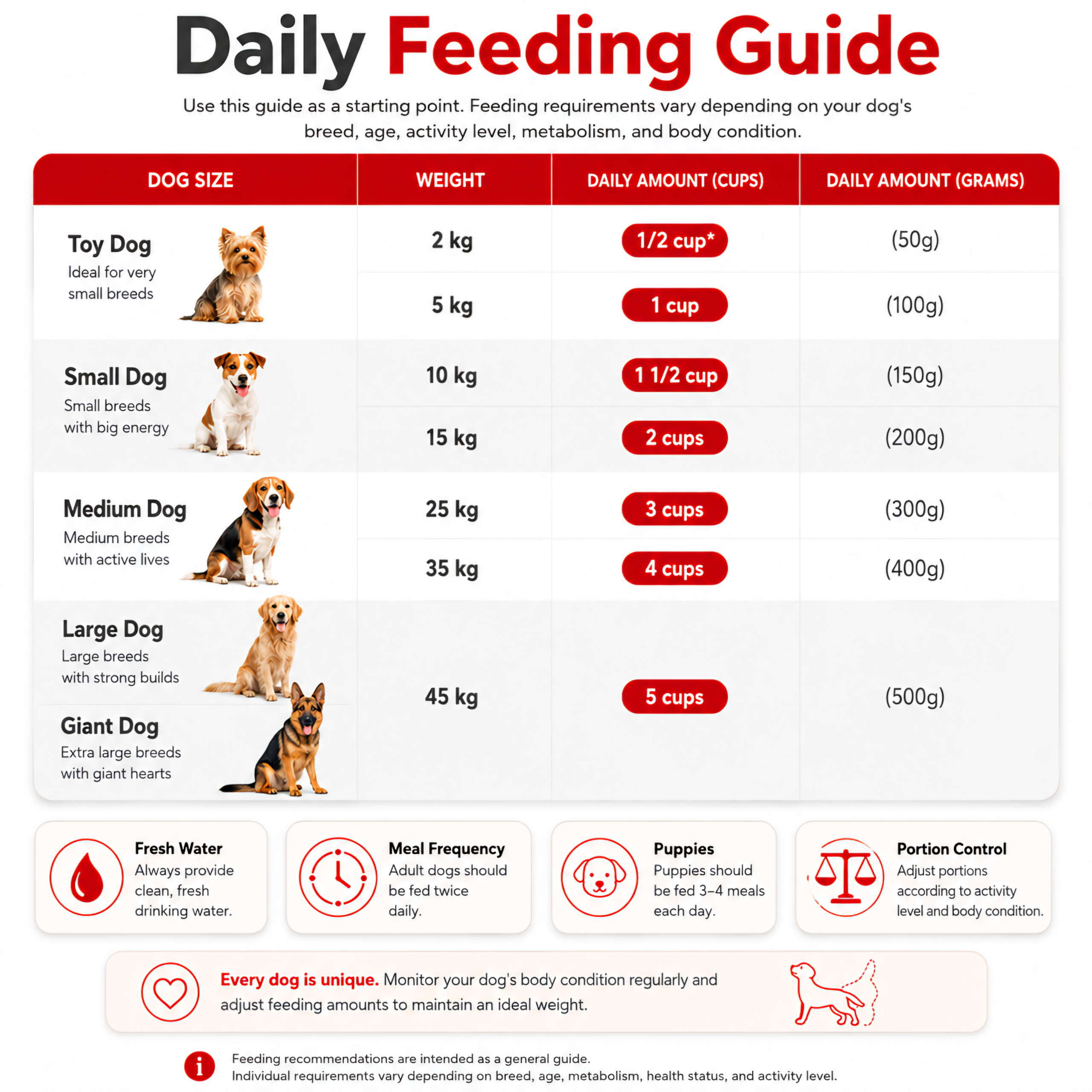
Recommended Daily Feeding Amount
Individual puppy requirements may vary based on breed, activity level, and body condition. Always ensure there is plenty of clean, fresh water available.
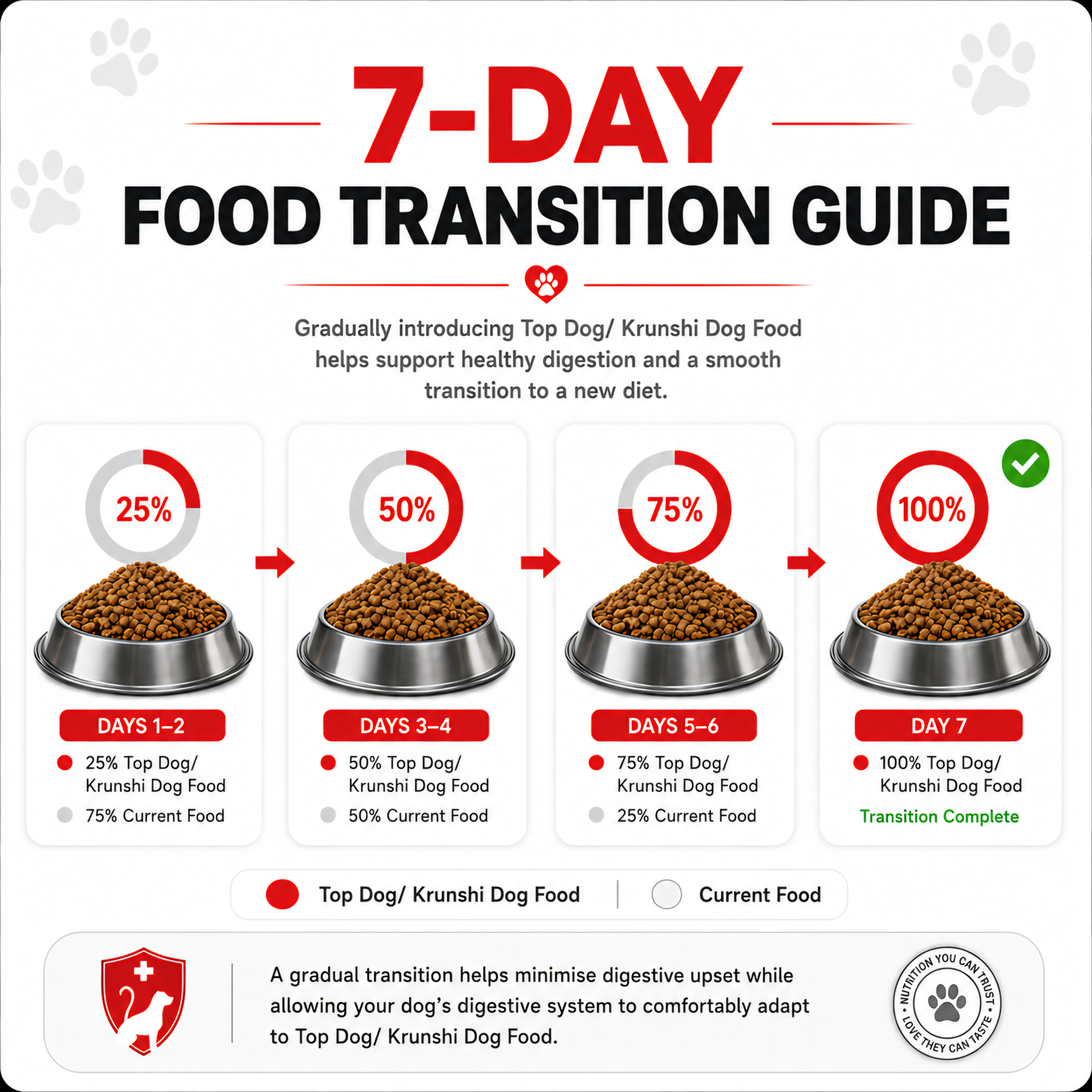
The Transition: Introducing TOP DOG PUPPY
Follow this 7-Day Introduction Ratio when switching to our food to help your puppy's digestive system adjust comfortably:
Feeding Guideline Amount
Signs Your Dog Is Receiving Proper Nutrition
A dog receiving balanced daily nutrition should have:
- Bright, alert eyes
- Healthy skin
- Glossy coat
- Firm stools
- Strong muscles
- Healthy body weight
- High energy levels
- Good appetite
Top Dog is formulated to support all these indicators through complete, balanced nutrition.
Feeding Tips
For the best results:
- Feed at the same time every day.
- Always provide clean, fresh drinking water.
- Store dog food in a cool, dry place.
- Use a clean feeding bowl.
- Avoid frequent diet changes.
- Monitor your dog's body condition regularly.
- Consult your veterinarian if your dog has special nutritional needs.
Best Practice for Top Dog Brands Storage
- Use Airtight Containers: Store dog food in airtight containers to prevent exposure to air, moisture, and pests. Use food-grade plastic containers with tight-fitting lids.
- Keep It Cool and Dry: Store in a cool, dry, and dark place, away from direct sunlight and heat sources. The optimal storage temperature is between 10°C and 21°C (50°F to 70°F). Avoid damp areas like basements to prevent mold growth.
- Original Packaging: If you keep food in its original bag, ensure it is tightly sealed by rolling down the top and securing it with a clip to minimize air exposure.
- Rotate Stock: Practice the "first in, first out" method. Use older bags before newer ones to ensure freshness.
- Check Expiration Dates: Always check the "best by" date before purchasing. Unopened dry food typically lasts 12 months; opened bags should be consumed within 4 to 6 weeks.
Pro Tip: Always discard any leftover food from the bowl to avoid contamination.